
Juicy Meatloaf with Roasted Potatoes
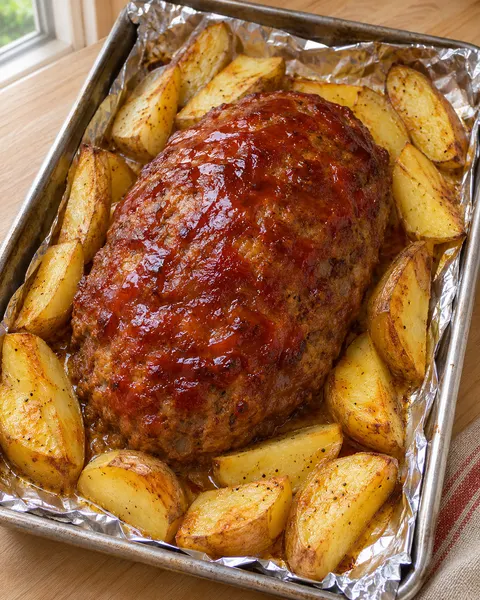
A tender free-form meatloaf with a glossy, tangy ketchup glaze, roasted on one sheet pan with golden Yukon Gold potato wedges. 8 servings.
 By Amanda DavisNOV 20, 20268 MIN
This post may contain affiliate links. If you buy something through one of them, we may earn a small commission at no extra cost to you. Learn more.
Ingredients
For the Meatloaf
For the Glaze
For the Potatoes
Instructions
- Set a rack in the center of the oven and preheat it to 400°F. Line an 18-by-13-inch rimmed metal baking sheet (a half sheet pan) with foil and rub the foil with 1 teaspoon of the olive oil.
- Scrub the potatoes and leave the skins on. Cut each one in half lengthwise, then cut each half lengthwise into 3 or 4 wedges about ¾ inch thick at the widest part. Put them in a large pot, cover with cold water by 1 inch and add 1 tablespoon kosher salt. Bring to a boil over high heat, then simmer for 5 minutes, just until the outside is tender but a knife meets firm resistance in the center.
- Drain the potatoes in a colander and let them steam-dry for 5 minutes, until the surfaces look dry and matte. While they boil and dry, make the meatloaf.
- In a large bowl, stir the breadcrumbs and milk together and let them soak for 5 minutes, until the crumbs are soft and the milk is absorbed. Whisk in the eggs, onion, garlic, Worcestershire sauce, 1½ teaspoons kosher salt and ½ teaspoon black pepper.
- Add the ground beef. Mix gently with your hands, pulling the meat apart and folding it through the crumb mixture, just until everything is evenly combined. Stop as soon as you can't see streaks of the crumb mixture; overmixing makes the loaf dense and tight.
- Turn the mixture out onto the center of the prepared pan and shape a compact oval loaf about 9 inches long, 5 inches wide and 2 inches thick. Smooth the top and sides so there are no cracks.
- In a small bowl, stir together the ⅔ cup ketchup, brown sugar and apple cider vinegar. Set aside half, about ⅓ cup, for the final coat.
- In a large bowl, gently toss the dry potato wedges with 2 tablespoons olive oil, ¾ teaspoon kosher salt, garlic powder, paprika and ¼ teaspoon black pepper. Arrange them around the loaf in a single layer with a cut side down against the pan, leaving a little space between wedges and about 1 inch between the potatoes and the meat.
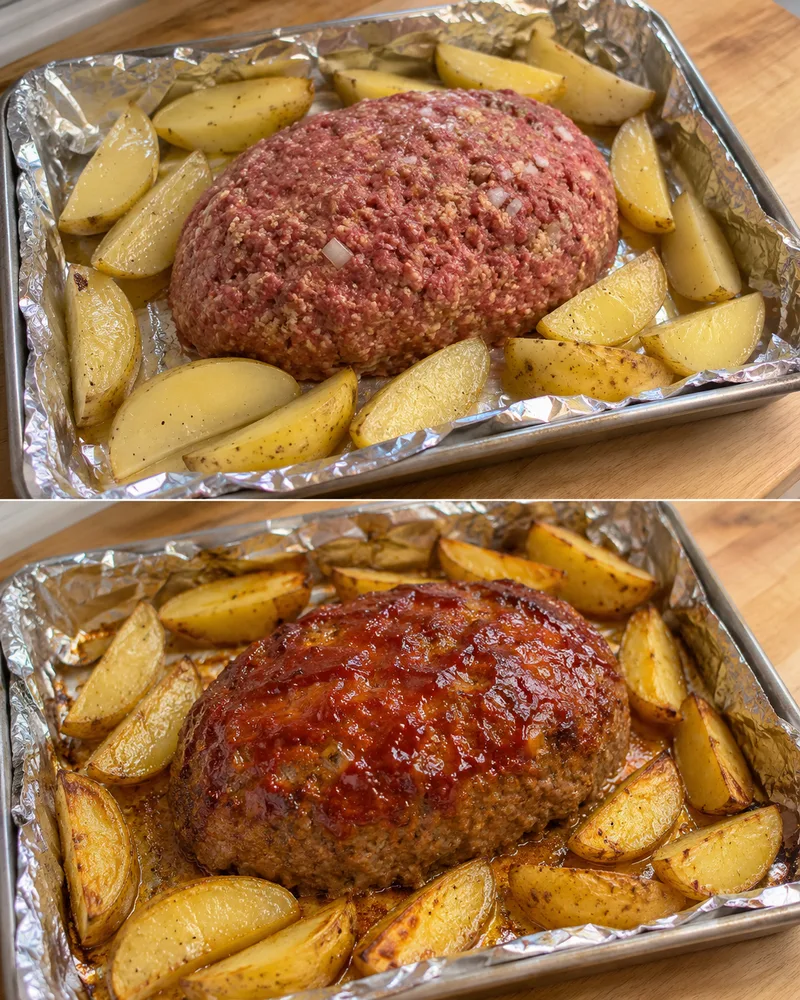
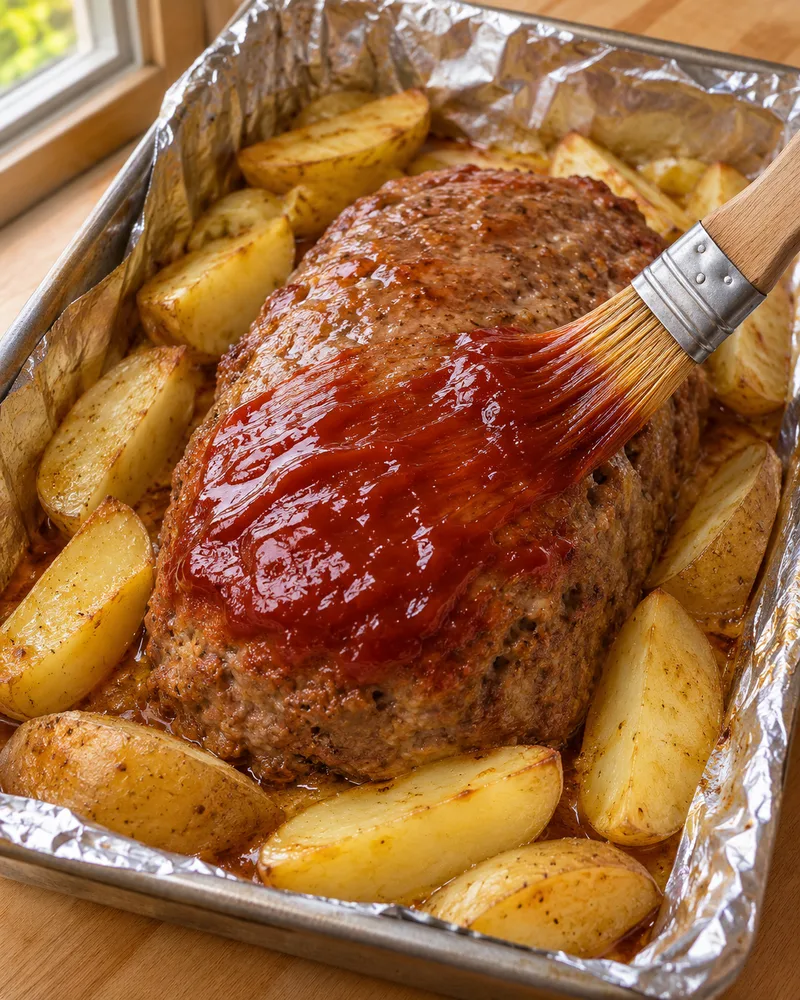
- Bake for 25 minutes. Take the pan out and set it on a heatproof surface. If a lot of fat has collected, spoon or baste it out into a heatproof bowl (see the note below). Turn the potatoes onto their other cut side, then brush the loaf with the first ⅓ cup of glaze. Return the pan to the oven.
- Bake for 15 minutes more. Brush the loaf with the remaining ⅓ cup glaze and bake for another 10 to 20 minutes, until an instant-read thermometer in the thickest part of the meatloaf reads 160°F, the safe minimum temperature for ground beef. Don't judge doneness by color alone. The glaze will be glossy and lightly browned at the edges.
- If the meatloaf reaches 160°F before the potatoes are golden and tender, move the loaf to a cutting board or platter, tent it loosely with foil and let it rest. Spread the potatoes out and roast them for 5 to 10 minutes more, until browned and tender in the center.
- Let the meatloaf rest for 10 minutes before slicing so the juices settle. Cut it into 8 thick slices and serve with the potato wedges and a spoonful of the pan juices.
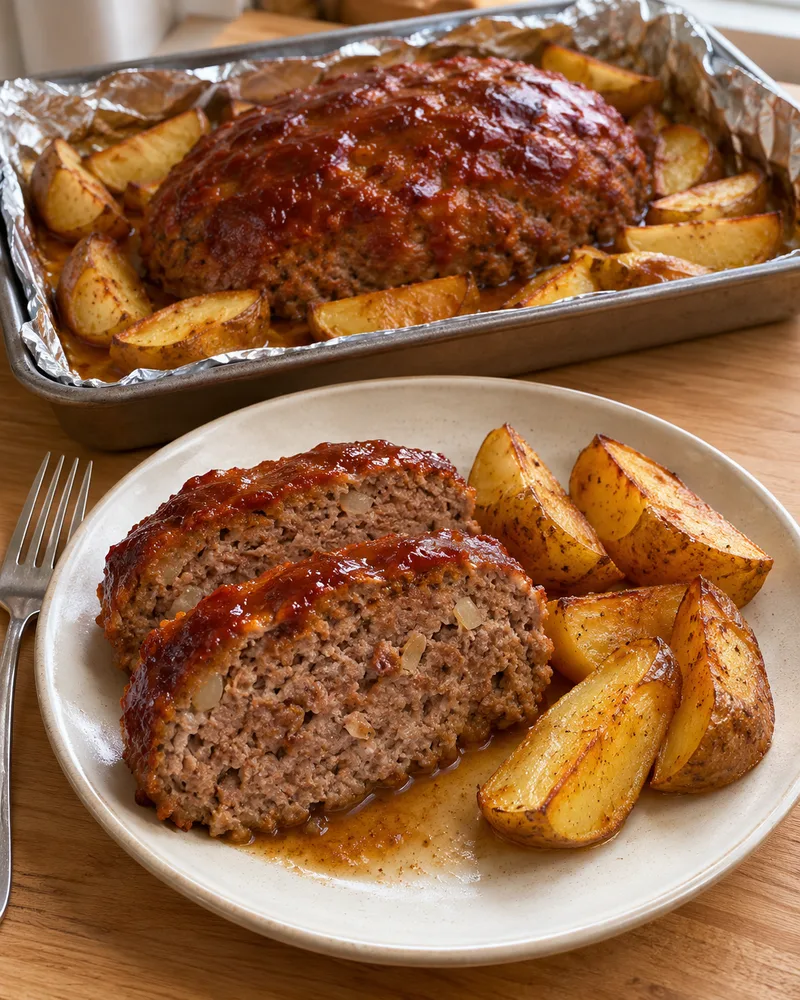
A tender, juicy meatloaf with a glossy, tangy-sweet ketchup glaze, baked right in the middle of a pan of golden Yukon Gold potato wedges. The potatoes brown on their cut sides and pick up a little of the savory pan juices as everything roasts together.
This is a one-pan oven dinner. The meatloaf is shaped by hand into a free-form oval on a foil-lined sheet pan, so more of its surface browns than in a loaf pan, and the parboiled potato wedges finish roasting alongside it. It serves 8 and takes about 1 hour 40 minutes from start to finish, including the rest.
Why You'll Love This Recipe
- One pan. The meatloaf and the potatoes roast together, and the foil makes cleanup easy.
- Juicy and tender. Breadcrumbs soaked in milk keep the meat moist, and gentle mixing keeps it tender.
- A classic glaze. Ketchup, brown sugar and a splash of cider vinegar, brushed on in two coats.
- Golden potatoes. A quick parboil means the wedges finish at the same time as the meatloaf.
- Leftovers that work. Cold meatloaf makes great sandwiches the next day.
Ingredients and Notes
The full amounts are in the ingredient list, separated into meatloaf, glaze and potatoes.
Meatloaf
Ground beef. 2 pounds, about 85% lean. It has enough fat to stay juicy without leaving the pan swimming in grease. Leaner beef (90% or more) makes a drier loaf; fattier beef (80/20) renders more fat into the pan.
Plain dry breadcrumbs. ¾ cup. They hold moisture and keep the loaf tender. You can use the same amount of panko, or 1½ cups fresh breadcrumbs. Plain crumbs let you control the seasoning; if you use Italian-seasoned crumbs, reduce the salt a little.
Whole milk. ½ cup, for soaking the crumbs. 2% milk works too.
Eggs. 2 large eggs bind the loaf so it slices cleanly.
Onion. 1 cup finely minced yellow onion, about 1 medium. Mince it small so it cooks through and doesn't make the loaf crumbly.
Garlic. 3 cloves, minced.
Worcestershire sauce. 1 tablespoon for savory depth.
Kosher salt and black pepper. 1½ teaspoons kosher salt and ½ teaspoon pepper. If you use table salt, use about 1 teaspoon, since it's saltier by volume.
Glaze
Ketchup. ⅔ cup total, divided: ⅓ cup for the first coat and ⅓ cup for the final coat.
Light brown sugar. 3 tablespoons, packed. Dark brown sugar works too, with a deeper molasses flavor.
Apple cider vinegar. 1 tablespoon to brighten the glaze and balance the sweetness.
Potatoes
Yukon Gold potatoes. 2 pounds, about 6 medium, cut into wedges. They're creamy inside and brown well. Red potatoes are a good substitute; russets work too but are a little more fragile after parboiling.
Kosher salt for the cooking water. 1 tablespoon, to season the potatoes as they parboil.
Olive oil. 2 tablespoons plus 1 teaspoon total, divided: 1 teaspoon to grease the foil and 2 tablespoons for the potatoes. Any neutral oil works.
Potato seasonings. ¾ teaspoon kosher salt, ½ teaspoon garlic powder, ½ teaspoon paprika and ¼ teaspoon black pepper.
Equipment
- An 18-by-13-inch rimmed metal baking sheet (half sheet pan), so the potatoes fit in a single layer around the loaf.
- Aluminum foil.
- A large pot and a colander for the potatoes.
- Two large bowls and a small bowl for the glaze.
- A pastry brush.
- An instant-read thermometer.
- A turkey baster or large spoon and a heatproof bowl for removing extra fat.
Why Parboil the Potatoes
Raw potato wedges take longer to become tender than the meatloaf takes to cook. A 5-minute simmer gives them a head start, so they turn golden and creamy by the time the loaf is done.
Drain them well and let them steam-dry for 5 minutes. Wet potatoes steam instead of browning. Once the surfaces look dry and slightly fuzzy, they're ready for oil and seasoning. Handle them gently; parboiled edges are soft.
Cut-side down, with space. Set each wedge on a cut side so it browns against the hot pan, and leave a little room between pieces. Crowded potatoes steam.
Handling the Rendered Fat
An 85% lean meatloaf releases some fat as it bakes. A little in the pan keeps the potatoes moist and flavorful, but too much makes them greasy instead of golden. Rather than tipping a heavy, hot pan to pour it off:
- Set the pan on a heatproof surface when you take it out to turn the potatoes.
- Use a turkey baster or large spoon to lift excess fat from around the meatloaf into a heatproof bowl.
- Or blot it. Hold a folded paper towel with tongs and soak up the pooled fat.
Let the fat cool and solidify, then throw it away in the trash. Don't pour it down the sink.
The Glaze, in Two Coats
The glaze goes on after the meatloaf has had a chance to firm up: the first coat after 25 minutes and the final coat 15 minutes later. That way the glaze never spends the whole bake in the oven, and the final coat bakes for only the last 10 to 20 minutes. Sugary glazes burn if they go on at the start in a 400°F oven. Timed this way, it turns glossy and lightly browned at the edges, not heavily charred.
How to Tell When It's Done
Use an instant-read thermometer in the thickest part of the meatloaf. Ground beef is safe at 160°F, the minimum internal temperature recommended by the USDA. Color isn't reliable: meatloaf can look brown inside before it's fully cooked, or stay slightly pink after it's safe.
If the meatloaf is done first, move it to a cutting board, tent it loosely with foil and let it rest while the potatoes roast 5 to 10 minutes more on their own.
Times at a Glance
- Prep: 30 minutes (cutting and parboiling the potatoes, mixing and shaping the meatloaf).
- Cook: about 1 hour at 400°F: 25 minutes, then 15 minutes, then 10 to 20 minutes after the final glaze.
- Rest: 10 minutes.
- Total: about 1 hour 40 minutes.
- Yield: 8 servings, one thick slice of meatloaf each with potatoes.
Serving Suggestions
- Green vegetables: steamed green beans, roasted broccoli or a simple green salad.
- Something tangy: a cucumber salad or coleslaw balances the rich meat.
- Extra glaze: stir together a second small batch of the glaze ingredients and warm it to serve on the side.
Make Ahead, Storage and Reheating
Make ahead. Mix and shape the meatloaf, cover it tightly and refrigerate for up to 1 day. Mix the glaze and keep it covered in the fridge too. Cut and parboil the potatoes just before baking. A meatloaf straight from the fridge may need 5 to 10 extra minutes; go by the thermometer.
Refrigerator storage. Refrigerate leftovers in airtight containers within 2 hours of cooking, and eat them within 3 to 4 days.
Freezing. Wrap cooked, cooled meatloaf slices individually and freeze for up to 3 months. Thaw them overnight in the refrigerator. The potatoes don't freeze well.
Reheating. Reheat slices and potatoes on a baking sheet, covered with foil, in a 350°F oven for 15 to 20 minutes, until hot (165°F in the center). For a single serving, microwave the slice covered, with a teaspoon of water on the plate, for about 1 to 2 minutes. The potatoes crisp up best in the oven or an air fryer.
Tips for Success
- Soak the crumbs first. Breadcrumbs soaked in milk (sometimes called a panade) keep the meat moist and help it hold together.
- Mix gently and briefly. Use your hands and stop as soon as the mixture looks evenly combined. Overmixing packs the proteins together and makes a dense, rubbery loaf.
- Mince the onion finely. Large onion pieces create weak spots where the loaf can crack.
- Shape it compact and even. About 9 inches long, 5 inches wide and 2 inches thick, with smooth sides, so it cooks evenly from end to end.
- Use a thermometer. Take it out at 160°F. Cooking it well past that dries it out.
- Rest before slicing. Ten minutes lets the juices settle, so the slices hold together.
Frequently Asked Questions
Why shape the meatloaf on a sheet pan instead of a loaf pan?
A free-form loaf has more surface exposed to the oven, so the edges brown and the glaze sets on the sides as well as the top. The fat runs off into the pan instead of pooling around the meat, and there's room for the potatoes.
What temperature should meatloaf be?
Ground beef meatloaf is done at 160°F in the thickest part, according to the USDA. Check it with an instant-read thermometer rather than relying on color.
Why is my meatloaf dense or dry?
It was probably mixed too much, made with very lean beef, or baked well past 160°F. Mix gently, use 85% lean beef and start checking the temperature after the final glaze has been on for 10 minutes.
Why did my meatloaf fall apart?
The onion pieces may have been too large, the crumbs may not have soaked long enough, or it was sliced right out of the oven. Mince the onion finely and let the loaf rest for 10 minutes before cutting.
Can I use ground turkey?
Yes, but it's leaner and cooks differently. Use ground turkey that's about 93% lean, and bake it to 165°F, the safe minimum temperature for ground poultry.
Why aren't my potatoes browning?
They were probably still wet, crowded or sitting in too much fat. Steam-dry them well, give them space and remove excess fat when you turn them.
More Recipes You'll Love
All Dinner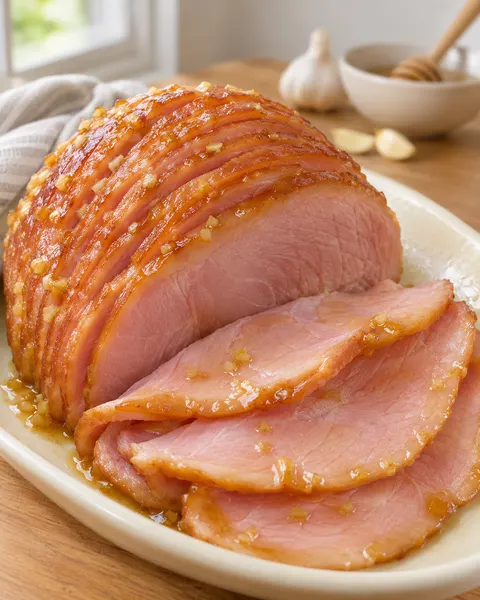 Dinner
Slow-Cooker Garlic Butter Honey Glazed Ham Bistro Roast
A fully cooked spiral-sliced half ham warmed gently on LOW with honey, butter and fresh garlic brushed between the slices…
 Dinner
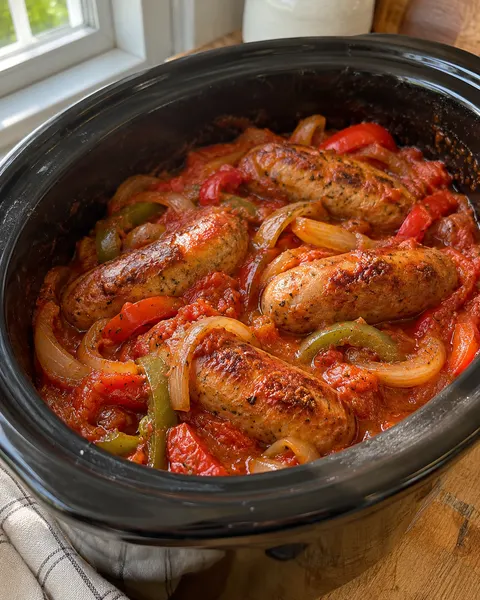
Juicy Slow Cooker Italian Sausage and Peppers Dinner
Browned sweet Italian sausage links nestled in soft red and green pepper strips, sliced onion and a garlicky crushed tomato sauce…
 Dinner
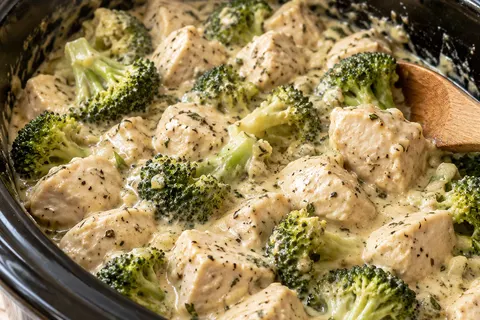
Slow Cooker Creamy Chicken & Broccoli
Tender bite-sized chicken breast and broccoli florets in a creamy garlic-Parmesan sauce made with cream cheese and low-sodium broth…
 Dinner
Creamy Cajun Shrimp and Rice Skillet
Juicy Cajun-seasoned shrimp folded into tender long-grain rice and a smooth, creamy sauce, all made in one skillet in about an hour.
 Dinner
Slow Cooker Orange Chicken
Tender bite-sized chicken thighs simmered in a sweet and tangy orange sauce made with fresh juice and zest, then thickened to a glossy finish.
 Dinner
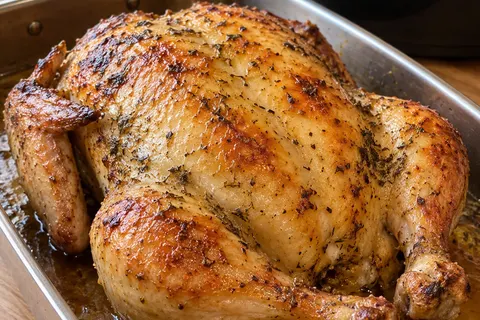
3-Ingredient Slow Cooker Buttery Roast Chicken
A whole chicken rubbed with seasoned butter and slow cooked until tender and juicy, made with just three ingredients and 10 minutes of prep.
 Dinner
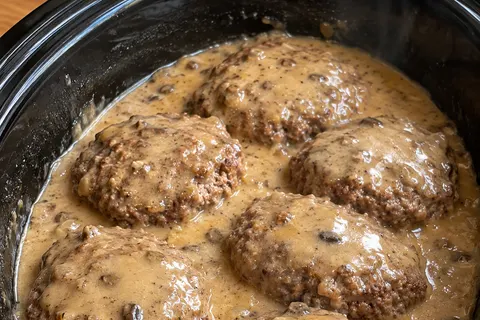
Slow Cooker 4-Ingredient Amish Poor Man's Steak
Tender ground beef patties slow cooked in a creamy mushroom gravy, made with just four ingredients and about 15 minutes of hands-on work.
 Dinner
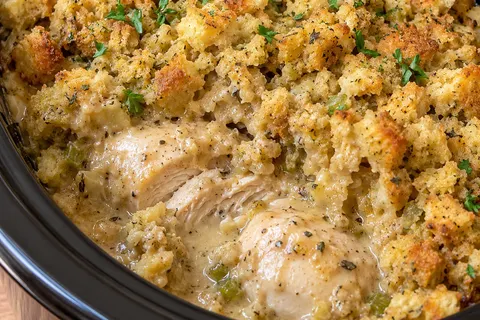
Juicy Crock Pot Chicken and Stuffing
Tender chicken breasts in a creamy, herby sauce under a layer of savory stuffing, made in the slow cooker with about 15 minutes of hands-on prep.