
The Best Homemade Butter Biscuits Recipe
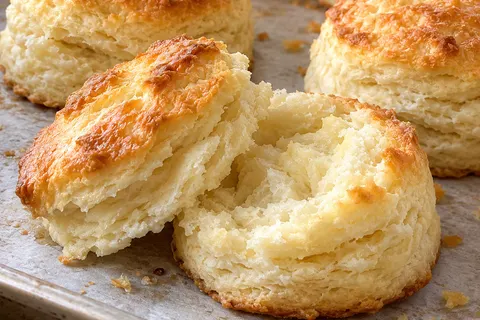
Tall, tender American biscuits with golden tops, flaky layers and a soft, buttery center, made with cold butter, cold whole milk and a few gentle folds.
 By Amanda DavisOCT 30, 202610 MIN
This post may contain affiliate links. If you buy something through one of them, we may earn a small commission at no extra cost to you. Learn more.
Ingredients
Instructions
- Set a rack in the center of the oven and preheat to 425°F (220°C). Line a light-colored rimmed baking sheet with parchment paper.
- In a large bowl, whisk together the flour, baking powder, sugar and salt until evenly combined.
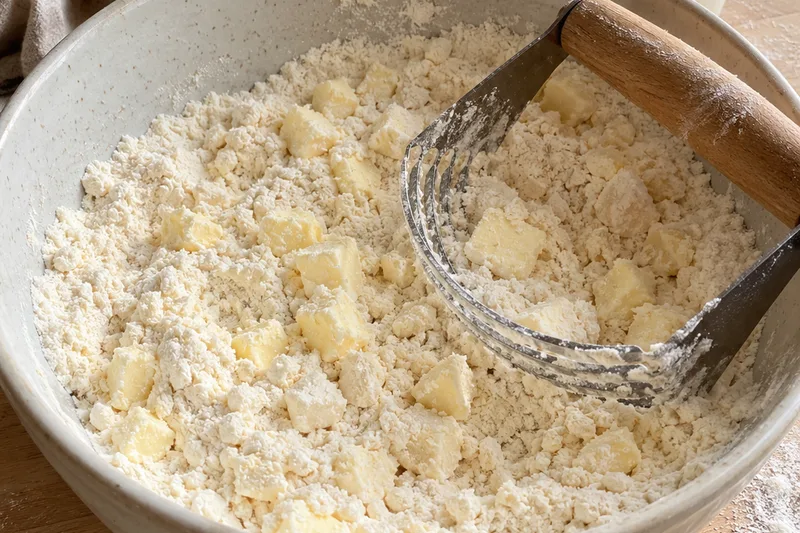
- Cut the cold butter into ½-inch cubes, or grate it on the large holes of a box grater if it is frozen. Toss it into the flour mixture, then cut it in with a pastry blender or two forks until most pieces are the size of peas, with some larger flattened pieces. You should still see small, distinct pieces of butter. Work quickly so the butter stays cold.
- Pour in 1 cup (240 ml) of cold milk and stir with a fork or flexible spatula just until the flour is moistened and the dough clumps together. It should look shaggy and feel slightly tacky, not smooth. If dry flour remains at the bottom of the bowl, add more milk 1 tablespoon at a time, up to 2 tablespoons.
- Turn the dough onto a lightly floured surface and press it together into a rectangle about ¾ inch thick. Fold it in thirds like a letter, turn it 90 degrees and gently pat it out to the same size again. Repeat for 3 folds in total, then pat the dough into a rectangle about 5 by 8½ inches and 1 inch (2.5 cm) thick. Do not knead.
- Dip a 2½-inch (6.5 cm) round biscuit cutter in flour and press it straight down through the dough, then lift it straight up without twisting. Cut 6 rounds, cutting them as close together as you can, and place them on the prepared baking sheet 1½ to 2 inches (4 to 5 cm) apart.
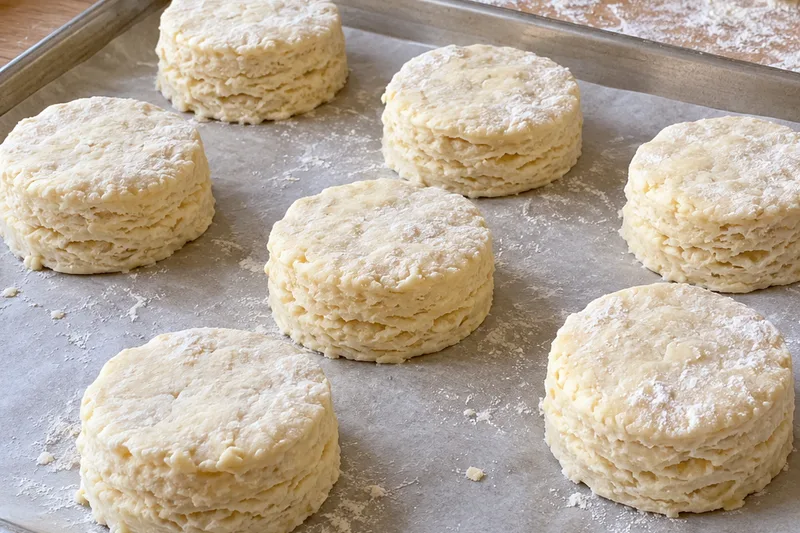
- Gently press the scraps together without kneading, pat them 1 inch thick and cut about 2 more rounds. These will be a little less tender than the first ones. Add them to the baking sheet.
- If the dough feels soft or warm, or the butter looks shiny or greasy, refrigerate the baking sheet for 15 minutes before baking.
- Bake for 15 to 20 minutes, until the biscuits have risen tall, the tops are golden brown and the bottoms are golden, not dark.
- Check one biscuit: the sides should look dry and set, and when you gently pull it apart at the side, the inside should be flaky and fluffy, not wet or doughy. If it isn't, bake for 2 to 3 minutes more and check again.
- If using, brush the hot biscuits with the melted butter right away. Let them cool on the baking sheet for 5 minutes and serve warm.
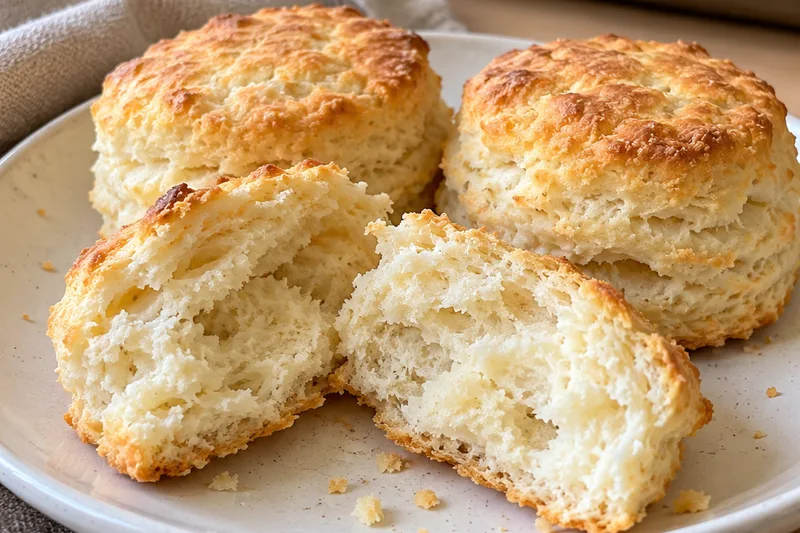
There's nothing quite like a basket of warm, homemade biscuits. These are classic American butter biscuits: tall and tender, with golden tops, flaky layers you can peel apart, and a soft, buttery inside that's perfect with a little jam or honey.
They're made with everyday ingredients you probably already have, including cold whole milk instead of buttermilk. The secret is in how you handle them: keep everything cold, mix only until the dough comes together, and give it a few gentle folds before cutting.
Why You'll Enjoy These Biscuits
- Tall and flaky. Cold butter and three simple folds create visible layers that rise up in the oven.
- Tender, buttery inside. A light hand and plenty of butter keep the crumb soft, not tough or bready.
- No buttermilk needed. The recipe is written for whole milk and baking powder, so there's no last-minute trip to the store.
- Simple pantry ingredients. Flour, baking powder, a little sugar, salt, butter and milk.
- Freezer-friendly. You can freeze the cut, unbaked biscuits and bake them straight from the freezer.
Ingredients and Notes
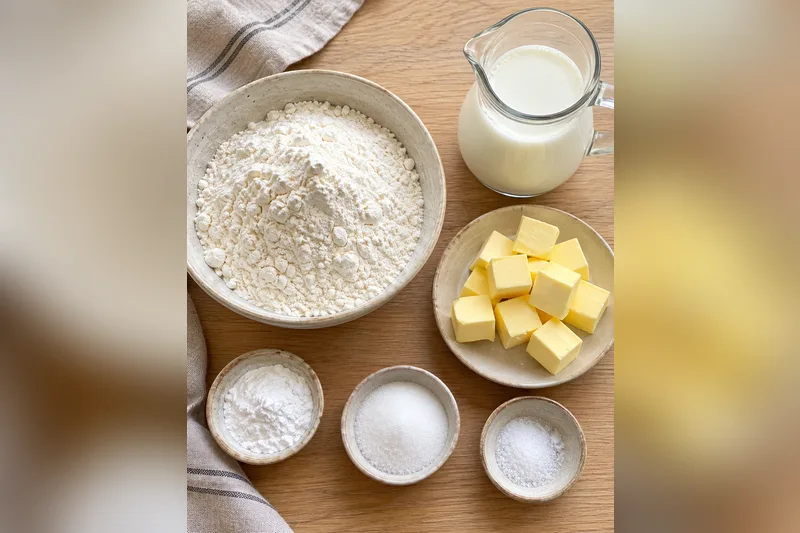
Exact amounts are in the ingredient list above. Here's what each one does:
All-purpose flour. 3 cups (360 g). Weighing is the most accurate method. If you use cups, measure without packing: stir the flour to loosen it, spoon it into the measuring cup until it's heaped, then sweep off the excess with the back of a knife. Scooping straight from the bag packs the flour and can add a lot more than you need, which makes biscuits dry and dense.
Baking powder. 4 teaspoons (16 g). It's the only leavener in this recipe and gives the biscuits their lift. Make sure it's fresh: an old can won't rise as well. A spoonful dropped into hot water should fizz right away.
Granulated sugar. 1 tablespoon (13 g). Just enough to round out the flavor and help the tops brown. The biscuits won't taste sweet.
Salt. 1¼ teaspoons (7 g) fine table salt. If you use Diamond Crystal kosher salt, which has larger, lighter crystals, use about 2½ teaspoons.
Cold unsalted butter. ¾ cup (1½ sticks, 170 g), straight from the refrigerator, or frozen if you plan to grate it. Unsalted butter lets you control the salt.
Cold whole milk. 1 cup (240 ml), plus up to 2 tablespoons (30 ml) more only if the dough is too dry. Keep it in the refrigerator until you need it. Whole milk gives a richer, more tender biscuit than low-fat milk.
Melted butter for brushing (optional). 1 tablespoon (14 g) unsalted butter, melted and brushed over the biscuits after baking for a shiny, buttery finish.
Equipment
- A light-colored rimmed baking sheet, about 13 by 18 inches (half sheet). Dark pans brown the bottoms faster.
- Parchment paper to line the baking sheet.
- A 2½-inch (6.5 cm) round biscuit cutter with a sharp edge.
- A pastry blender or two forks for cutting in the butter, or a box grater if you grate frozen butter.
- A large mixing bowl, a whisk and a fork or flexible spatula.
- A kitchen scale (recommended) and measuring cups and spoons.
- A ruler for checking the dough thickness, if you like.
- A pastry brush if you're brushing with melted butter.
Recipe Notes
- Yield: 8 biscuits, 6 from the first cut and about 2 from the gathered scraps.
- Biscuit size: 2½-inch (6.5 cm) rounds cut from dough patted 1 inch (2.5 cm) thick.
- Times: about 25 minutes of prep and 15 to 20 minutes in the oven. If the dough needs chilling, add 15 minutes.
- Oven: 425°F (220°C), with the rack in the center so the bottoms don't brown too quickly.
How to Cut In Cold Butter
There are two easy ways to get the butter into the flour. Either way, the goal is the same: small, separate pieces of cold butter coated in flour, not a smooth, even mixture.
Cubing. Cut the cold butter into ½-inch cubes and toss them in the flour. Press down with a pastry blender, or two forks, until most pieces are the size of peas and a few are larger and flattened.
Grating. Freeze the butter for about 30 minutes, then grate it on the large holes of a box grater straight into the flour, tossing as you go. Grated butter mixes in quickly with very little handling.
You should be able to see small streaks and pieces of butter in the dough. In the hot oven, the water in those pieces turns to steam and pushes the layers apart, which is what makes biscuits flaky.
Spacing and Texture
The biscuits go on the baking sheet 1½ to 2 inches (4 to 5 cm) apart. The hot air reaches all sides, so they bake through evenly, rise tall and get lightly crisp, golden edges.
If you prefer soft, pull-apart sides, place the biscuits so they're just touching. Touching biscuits support each other as they rise, but the centers take a little longer to bake, so always check one before taking them out.
Troubleshooting
Flat biscuits. The most common causes are old baking powder, dough patted too thin, a twisted cutter, or butter that got too warm before baking. Check the date on your baking powder, pat the dough a full 1 inch thick, press the cutter straight down, and chill the cut biscuits for 15 minutes if the dough feels soft.
Tough biscuits. The dough was overmixed or kneaded, or too much flour was added. Stir just until the dough comes together, keep the folds gentle and limit them to three, and use only a light dusting of flour. Biscuits cut from scraps will be a little less tender.
Spreading. If biscuits spread sideways, the butter was too warm or the dough was too wet. Keep the milk and butter cold, add extra milk only if the dough is truly too dry, and chill the biscuits before baking if the butter looks greasy. An oven that isn't fully preheated can also cause spreading.
Dry interiors. Usually from too much flour, often scooped instead of spooned, or from baking too long. Weigh the flour if you can, and start checking at 15 minutes.
Doughy centers. The oven may be running cool, or the biscuits are touching. Make sure the oven is fully preheated, use an oven thermometer if you have one, and pull one biscuit apart to check before taking them out.
Dark bottoms. Dark baking sheets and low oven racks brown the bottoms quickly. Use a light-colored pan, bake on the center rack, or set the baking sheet inside a second sheet for extra insulation.
Serving Suggestions
These biscuits are delicious on their own. If you like, serve them with any of these optional extras:
- Butter and your favorite jam or preserves.
- A drizzle of honey.
- Sausage gravy for a classic Southern breakfast. For a gravy recipe, see Southern Sausage Gravy and Biscuits.
- Alongside eggs and bacon or a bowl of soup.
- Split and filled with a fried egg and sausage for breakfast sandwiches.
Storage, Freezing and Reheating
At room temperature. Biscuits are best the day they're baked. Let them cool completely, then store them in an airtight container or zip-top bag at room temperature for up to 2 days.
Reheating. Wrap the biscuits loosely in foil and warm them in a 350°F (175°C) oven for 5 to 10 minutes. The microwave works in a pinch, but it can make biscuits chewy.
Freezing baked biscuits. Cool them completely, then freeze them in a freezer bag for up to 3 months. Thaw at room temperature, then reheat in foil at 350°F (175°C) for about 10 minutes.
Freezing unbaked biscuits. Cut the dough, arrange the rounds on a parchment-lined baking sheet and freeze until solid, about 1 hour. Then transfer them to a freezer bag. Bake from frozen, without thawing, at 425°F (220°C). They usually need 3 to 5 minutes longer than fresh biscuits. Check one for doneness before taking them out. Baking powder slowly loses strength, so for the best rise, bake them within about a month.
Raw dough. Don't taste the raw biscuit dough. Uncooked flour can carry harmful bacteria, so it should always be baked before eating.
Tips for Success
Cold butter
- Keep the butter and milk in the refrigerator until you need them.
- Work quickly and avoid squeezing the butter with warm hands.
- If the butter starts to look shiny or soft at any point, put the bowl or the dough in the refrigerator for 10 to 15 minutes.
Tender dough
- Measure the flour carefully, ideally by weight.
- Stir the milk in just until the dough comes together. Some dry bits are fine; they'll disappear during the folds.
- Never knead biscuit dough. Kneading develops gluten and makes biscuits tough and chewy.
Flaky layers
- Do exactly three letter folds. Each one stacks the butter-streaked dough into more layers.
- Use only as much flour on the counter as you need to keep the dough from sticking.
A good rise
- Use fresh baking powder.
- Pat the dough a full 1 inch thick. Thin dough makes short biscuits.
- Press the cutter straight down and lift it straight up. Twisting seals the edges, so the biscuits can't rise as high.
- Place the biscuits on the sheet top side up.
- Bake them in a fully preheated oven.
Variations
These are optional changes to the base recipe. The pictured biscuits are plain, made exactly as written above.
- Cheddar biscuits: toss ¾ cup (75 g) shredded sharp cheddar into the flour mixture after cutting in the butter.
- Herb biscuits: add 2 tablespoons chopped fresh chives or 1 teaspoon dried thyme to the flour mixture.
- Honey butter finish: stir 1 teaspoon honey into the melted butter before brushing.
- Pull-apart biscuits: place the rounds so they're just touching for soft sides, and check one for doneness before taking them out.
Frequently Asked Questions
Can I use buttermilk instead of milk?
Not as a simple swap. This recipe is balanced for milk and baking powder. Buttermilk is acidic and thicker, and buttermilk biscuit recipes usually add baking soda to balance it. Switching to buttermilk would change the rise, the texture and the flavor, so it's best to use a recipe written for buttermilk.
Can I use salted butter?
Yes. Cut the salt to ¾ teaspoon (4 g) to make up for the salt in the butter. The amount of salt in butter varies by brand, so the flavor may be a little different.
Can I make biscuits ahead of time?
Yes. Freezing the unbaked biscuits is the easiest way: bake them straight from the freezer whenever you want fresh biscuits. You can also cover the cut biscuits and refrigerate them for a few hours before baking, but they may not rise quite as high as biscuits baked right away.
How do I cut biscuits without a biscuit cutter?
Use a sharp knife to cut the dough into 8 squares. Squares use all the dough without scraps, so there's nothing to reroll. A thin-rimmed drinking glass about 2½ inches across also works, but its edge is duller than a cutter's and can pinch the edges. Flour it and press straight down without twisting. Either way, expect a somewhat different shape and rise than with a sharp round cutter.
Why do I need to fold the dough?
Folding stacks layers of dough and cold butter on top of each other. In the oven, the butter melts and releases steam that separates the layers, making the biscuits flaky. Three folds are enough. More folding works the dough and can make it tough.
Why shouldn't I twist the biscuit cutter?
Twisting pinches and seals the cut edges, which keeps the layers from separating and rising. Press straight down and lift straight up.
Can I use low-fat milk?
You can, but whole milk gives a richer, more tender biscuit. With low-fat milk, the biscuits may be a little less tender and less browned.
More Recipes You'll Love
All Breakfast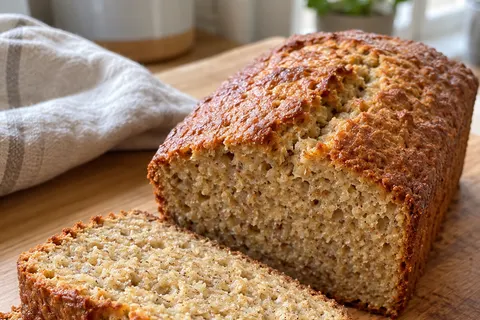 Breakfast
Oat & Banana Bread – No Flour or Added Sugar
A small, moist oat banana loaf made with ground rolled oats, ripe bananas, eggs and unsweetened plant milk, with no added flour, sugar or oil.
 Breakfast
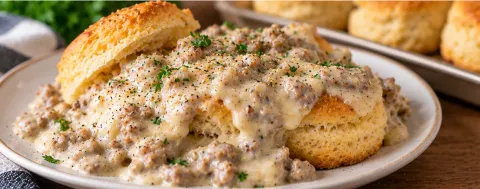
Southern Sausage Gravy and Biscuits
Buttery, flaky biscuits get smothered in a peppery sausage gravy made from scratch — a classic Southern breakfast that's really just a good roux away.
 Breakfast
Overnight Sausage and Egg Breakfast Casserole
Bread, sausage, eggs, and cheese soak together overnight so all that's left in the morning is baking a golden, hands-off casserole for a crowd.
 Breakfast
Loaded Denver Omelette
Ham, bell peppers, and onions get folded into a soft-cooked omelette for a protein-packed breakfast that's really just about timing the eggs right.
 Breakfast
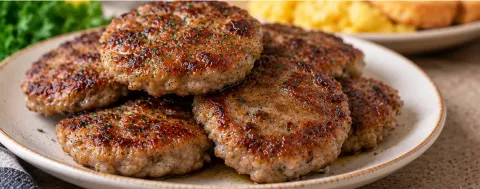
Homemade Breakfast Sausage Patties
Ground pork mixed with a simple blend of sage, thyme, and a touch of brown sugar makes patties with more flavor than most store-bought versions.
 Breakfast
Freezer-Friendly Breakfast Burritos
Scrambled eggs, sausage, and cheese rolled into tortillas and frozen individually — a real make-ahead breakfast that reheats in minutes on a busy morning.
 Breakfast
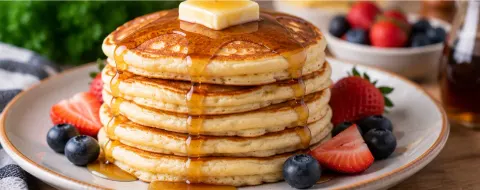
Fluffy Buttermilk Pancakes
Buttermilk and a mix of baking soda and baking powder give these pancakes real height and a tender crumb, with crisp edges from a properly hot griddle.
 Breakfast
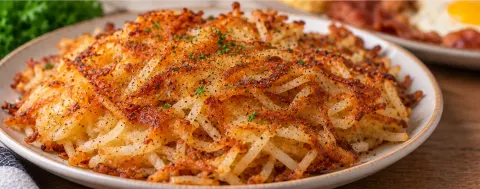
Crispy Diner-Style Hash Browns
The difference between soggy and genuinely crispy hash browns almost always comes down to one step: getting the water out of the shredded potatoes first.